Top Instagrammable Spots in Corfu
Corfu is naturally photogenic. You don’t need to search too hard, but some places consistently stand out, both in real life and in photos.
These are the spots that give you clean, recognisable visuals and are easy to work into your trip.
1. Corfu Old Town
This is the easiest and most reliable place for photos.
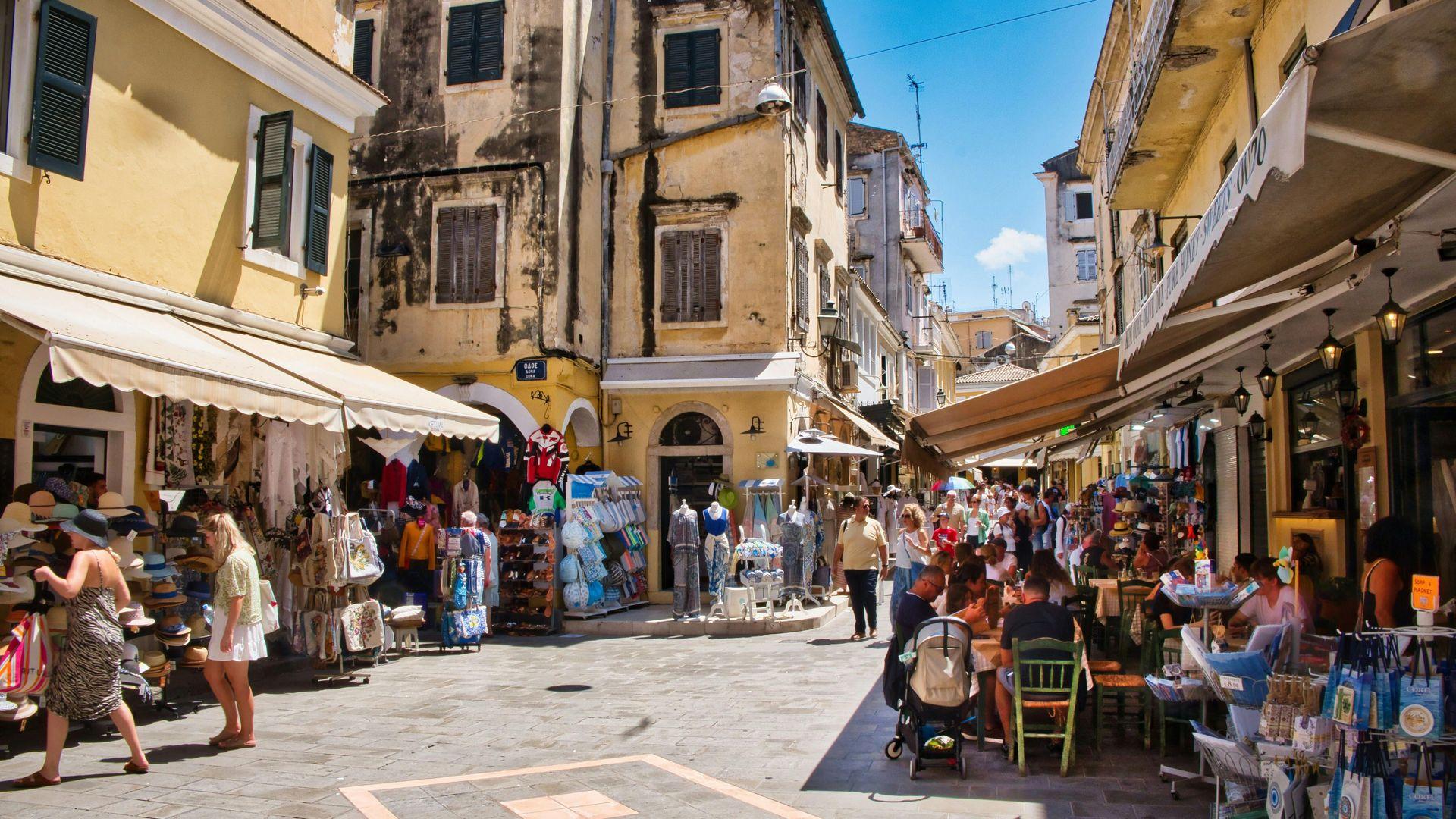
Think narrow streets, pastel buildings, shutters, balconies, and soft natural light bouncing between walls. You don’t need a specific spot, just walk. Every corner feels slightly different, which is why it works so well visually.
The area reflects Venetian influence, which is why the architecture feels slightly different from other Greek islands. Look out for small squares and archways, they naturally frame photos without needing to set anything up.
2. Paleokastritsa
One of the most recognisable coastal areas in Corfu.
Clear turquoise water, green hills, and viewpoints looking down over bays. Most photos are taken from higher ground, looking out across the coastline. There are several viewpoints along the road, so you don’t need to hike far to find a good angle.
The contrast between the deep water and the surrounding greenery is what makes this area stand out visually.
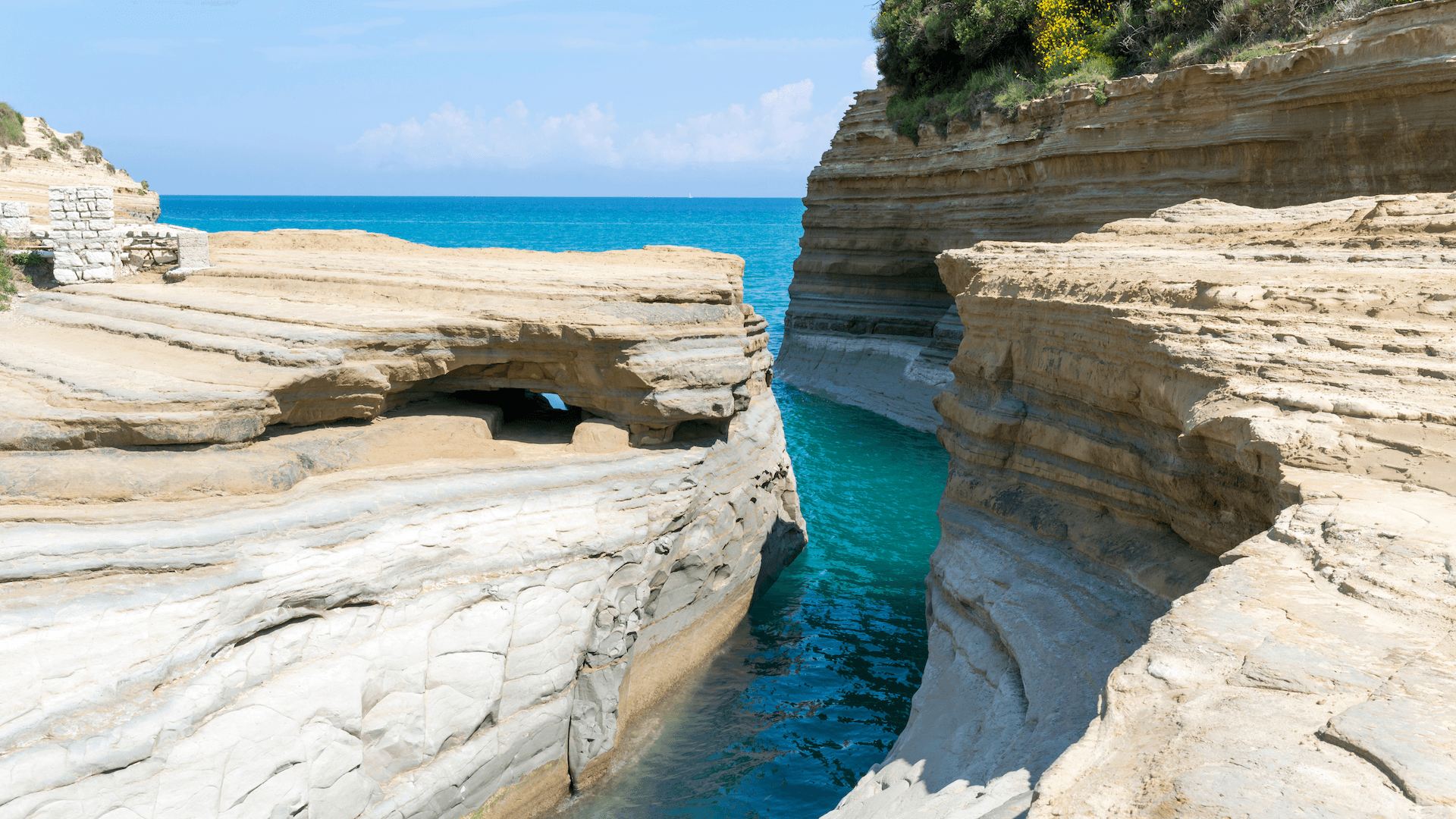
3. Canal d’Amour
This is one of the island’s most distinct natural formations. Soft sandstone cliffs shaped by the sea, creating narrow channels and curved edges. It’s visually different from typical beaches, which is why it stands out in photos. The shapes have been formed naturally over time by wind and water erosion.
It’s best to move around slightly rather than stay in one spot, angles change the look completely.
4. Vlacherna Monastery
Probably the most iconic single image of Corfu.
A small white monastery connected to land by a narrow walkway, surrounded by water. Often photographed from slightly above, with planes occasionally passing in the background. It’s located near the airport, which is why low-flying planes are sometimes visible.
The viewpoint from Kanoni is one of the most common places to capture this shot.
5. Loggas Beach
Best known for sunsets.
High cliffs, open horizon, and warm evening light. It’s less about detail and more about atmosphere, wide shots, silhouettes, and colour. The beach sits below steep cliffs, so most photos are taken from above rather than on the sand.
Sunset times vary through the season, but this spot is consistently known for evening views.
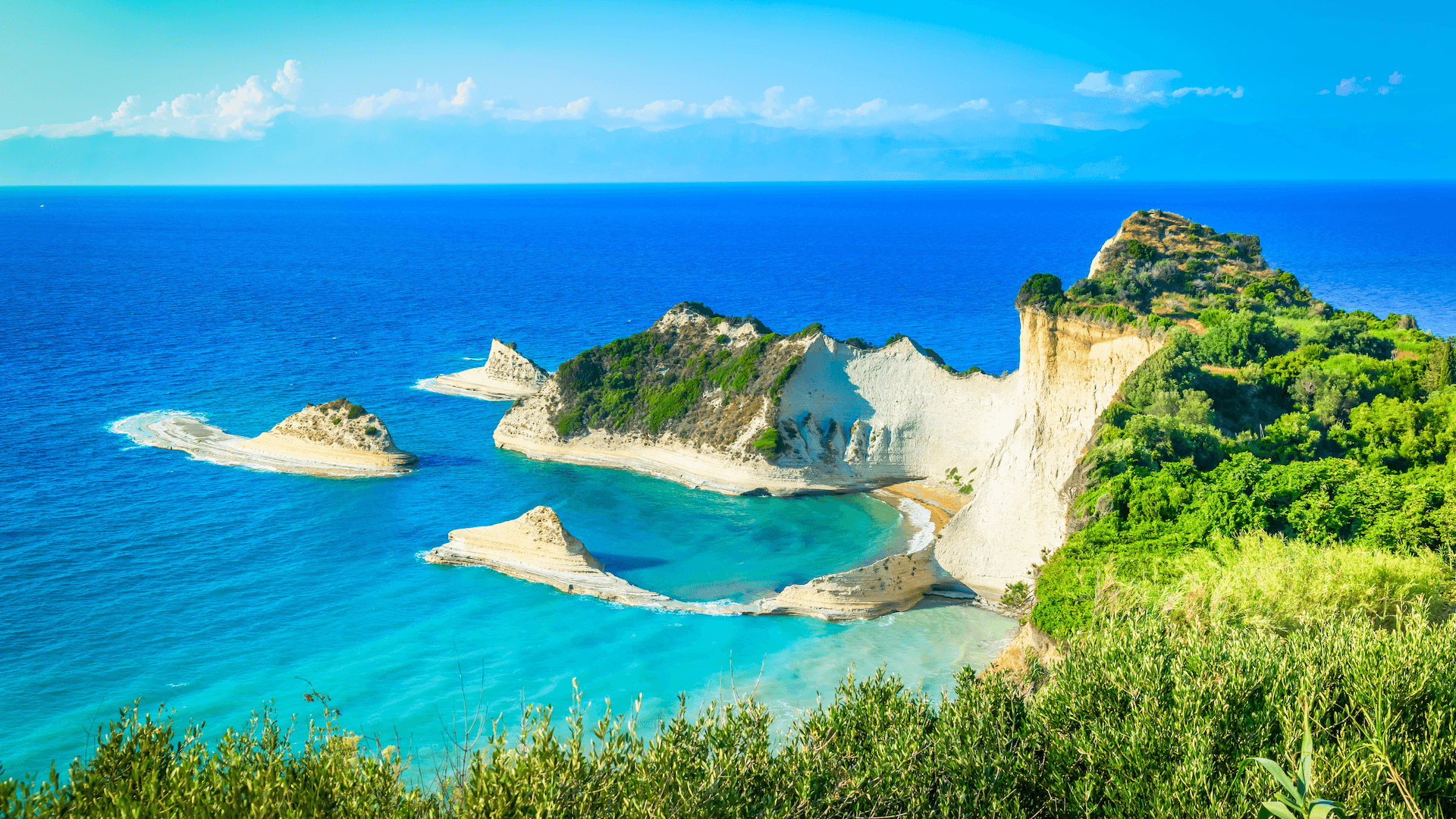
6. Cape Drastis
White cliffs and unusual rock shapes that look almost sculpted.
It’s one of the more different landscapes on the island, less greenery, more contrast between rock and sea. Works best from a distance rather than close-up. The area is accessed via rural roads, so it feels quieter than more central locations.
The formations are natural and change slightly over time due to erosion.
7. Old Fortress Corfu
This is where you go for wide views over the town. From the top, you get a clear look at the rooftops, coastline and surrounding sea. It’s more about perspective than detail.
The fortress dates back to Venetian rule and sits on a peninsula just outside the old town. There’s a clear walking path to the top, so it’s easy to reach without needing a guide.
8. Barbati Beach
A cleaner, simpler beach setting. Clear water, pebbled shore, and mountains in the background. It doesn’t rely on anything dramatic; it just looks good naturally. It’s located on the northeast coast, with views towards mainland Greece across the water.
The beach is known for its clarity, making it a good spot for simple, clean coastal shots.
A note from us
Corfu isn’t about chasing one perfect photo. It’s about consistency, good light, good colours, and places that naturally look the part without needing much effort.
Most of these spots are easy to reach and don’t require complicated planning, which makes a big difference when you’re actually there. The best time for photos is usually early morning or later in the evening, when the light is softer and places feel less busy. And in most cases, you don’t need to go far off route, many of these views are already along the way. Take your time, move around a little, and you’ll naturally find the angles that work best.
Author : Bilge Oguzalp - Published 30/04/2026